I tend to stay away from Hollywood gossip but nowadays it seems to be reported more as news than gossip. In fact, what is reported now in newscasts is mostly liberal propaganda and Hollywood gossip. Therefore, as I mentioned before, I tend to avoid "the news".
But I do live in the world and therefore am exposed to worldly things. The other day I read something about Bruce Jenner's family expressing their opinions on his struggles with transgenderism.
Anyway what I heard was that his wife/ex-wife? and kids were proclaiming to the world that Bruce was their hero and expressing how proud they were of him for being true to himself for choosing to live as a woman now. Of course that's paraphrasing but that's the gist of what I got out of what I heard.
What is this world coming to? Is that really the "politically correct" response that people expect? To me, I am deeply saddened when people struggle with trials/issues. As I was when I heard about Bruce Jenner's struggle with his gender identity. Are people's personal struggles/trials things we should be celebrating?
Let me give you a few ridiculous examples that illustrate the same thing. If someone who struggles with bipolar disorder yields to the thoughts that the world is better off without him and commits suicide-- Should we say we are proud of him for being true to himself? Should we call him a hero for not trying to change who he really is inside?
How about a schizophrenic who goes on a murderous rampage because he thinks the people around him are communists committing government conspiracies? Should we applaud his behavior because he is being true to himself and that's just who he is?
What about someone struggling with infertility? Are they being true to themselves by not pursuing adoption and/or infertility treatment? Because that's the way God made them and that's just who they are?
Obviously all of the above examples have a physical pathology behind the individual trials/struggles. I do believe and was taught in medical school that there are physical (chemical) imbalances during fetal development that can cause actual changes to parts of the brain which can lead to same-sex attraction, gender identity issues, etc. Those are real struggles some people must deal with. It is not something that should be celebrated.
Granted, there are people who choose certain lifestyles not because of actual physical problems but because they have their agency and that's their choice. That's a different subject.
My point is though, that we all have different trials we must face. Whether it be physical, mental, emotional, spiritual, or combination of any or all of the above. That is mortality. That is why we're here. We're here to be tested to see how well we endure our trials, learn from and overcome them.
Satan is so cunning that he has twisted people's trials into celebrations.
It really makes me sad and I find it appalling that the world celebrates others' misfortunes/trials/bad choices by saying "good for you for being true to yourself" or "I'm so proud of you, you're my hero". When they should be saying, "I'm sorry you're having to go through this difficult trial" and "How can I help?".
It really does baffle me that people allow Satan to control their lives to such a degree that they don't even see or understand how ridiculous they are. Sin really does make you stupid!
"O that cunning plan of the evil one! O the vainness, and the frailties, and the foolishness of men!" 2 Nephi 9:28
That's my two cents.
Friday, May 1, 2015


Saturday, April 25, 2015
DNA King
As most of you know, our family has recently had our DNA analyzed. It should come as no surprise to anybody that I am the DNA king! :-) I was told in the hospital when I was on my death bed that the only reason I was alive was because of my superior genetics. My DNA analysis proves my genetic superiority. :-)
The worst genetic trait I had was lack of empathy. Which is arguably a favorable trait if you think about it. It really does come in handy to not care about what people think. I'm sure it's linked somehow to my excessive self-esteem levels. I know I'm the king and no one is going to convince me otherwise. :-)
The second worst genetic trait I had was lack of facial recognition. I'm not good at remembering names and faces. This is certainly true. When I was on my mission I would always have to ask my companions who we were going to see on callbacks because I couldn't remember them.
But these two traits work well together because even though I don't remember names and faces, I don't care that I don't remember! :-) Those two symbiotic traits have served me well during my lifetime.
So even though promethease marks these as bad traits -- I would argue that they are actually good traits to possess.
I could go on and on about all of my good traits but let me just mention a few that stick out in my mind.
1 -- I have a strong heart. Lowest risk of atrial fibrillation, low risk of myocardial infarction (heart attack), lower risk of cardioembolic ischemic stroke.
2 -- I have the good warrior gene which means I handle stress better. And according to my Promethease report I am "able to perform better in a test where the optimal strategy changes."
3 -- I have increased memory performance.
4 -- I'm resistant to the norovirus.
5 -- I'm a fast caffeine metabolizer-- I am less stimulated by caffeine. Funny thing is I never touch the stuff! :-)
6 --I am lactose tolerant.
7 -- I have the lowest odds of cannabis addiction. :-) Guess I live in the right state for that -- ha ha.
8 -- I'm at much lower risk for type I diabetes .15x.
9 -- I'm a likely sprinter -- I always did run on my toes. :-)
10 -- Promethease tells me I can eat all the brains I want -- I'm resistant to prion disease (Creutzfeldt Jakob aka mad cow disease).
Oh and a fun little tidbit: I am 2.5% Neanderthal and in the 24th percentile among European descendents. :-)
Those are just some of the more interesting things from my DNA report.
Basically what it comes down to is I am the DNA King. :-) But this shouldn't surprise anybody. It certainly doesn't surprise me. I have always known I am the King genetically and otherwise. :-) And I'm humble to boot. ;-)
That's my two cents.
For completeness sake and just for fun, here is the breakdown of my ancestral composition based on my DNA:
The worst genetic trait I had was lack of empathy. Which is arguably a favorable trait if you think about it. It really does come in handy to not care about what people think. I'm sure it's linked somehow to my excessive self-esteem levels. I know I'm the king and no one is going to convince me otherwise. :-)
The second worst genetic trait I had was lack of facial recognition. I'm not good at remembering names and faces. This is certainly true. When I was on my mission I would always have to ask my companions who we were going to see on callbacks because I couldn't remember them.
But these two traits work well together because even though I don't remember names and faces, I don't care that I don't remember! :-) Those two symbiotic traits have served me well during my lifetime.
So even though promethease marks these as bad traits -- I would argue that they are actually good traits to possess.
I could go on and on about all of my good traits but let me just mention a few that stick out in my mind.
1 -- I have a strong heart. Lowest risk of atrial fibrillation, low risk of myocardial infarction (heart attack), lower risk of cardioembolic ischemic stroke.
2 -- I have the good warrior gene which means I handle stress better. And according to my Promethease report I am "able to perform better in a test where the optimal strategy changes."
3 -- I have increased memory performance.
4 -- I'm resistant to the norovirus.
5 -- I'm a fast caffeine metabolizer-- I am less stimulated by caffeine. Funny thing is I never touch the stuff! :-)
6 --I am lactose tolerant.
7 -- I have the lowest odds of cannabis addiction. :-) Guess I live in the right state for that -- ha ha.
8 -- I'm at much lower risk for type I diabetes .15x.
9 -- I'm a likely sprinter -- I always did run on my toes. :-)
10 -- Promethease tells me I can eat all the brains I want -- I'm resistant to prion disease (Creutzfeldt Jakob aka mad cow disease).
Oh and a fun little tidbit: I am 2.5% Neanderthal and in the 24th percentile among European descendents. :-)
Those are just some of the more interesting things from my DNA report.
Basically what it comes down to is I am the DNA King. :-) But this shouldn't surprise anybody. It certainly doesn't surprise me. I have always known I am the King genetically and otherwise. :-) And I'm humble to boot. ;-)
That's my two cents.
For completeness sake and just for fun, here is the breakdown of my ancestral composition based on my DNA:
99.8%
European
Northern European
50.7%
British & Irish
9.1%
French & German
30.2%
Broadly Northern European
Southern European
0.5%
Iberian
1.2%
Broadly Southern European
0.1%
Ashkenazi
0.8%
Broadly European
0.2%
Sub-Saharan African
0.2%
West African
< 0.1%
Unassigned
100%
Tammy
Tuesday, April 21, 2015
Why I Don't Watch the News
I haven't seen more than a handful of newscasts since the 2012 election. Basically, I'm fed up with mainstream media and their liberal propaganda.
Well, last night I actually watched a local newscast. And it just reminded me as to why I quit watching.
Take the sportscast for instance. The first story was about the Mariners. They interviewed the general manager who basically said winning is good and losing is bad and he's much happier when he wins. Then they interviewed one of the players. He basically said that they aren't playing well right now but they have potential.
I've always felt that sports interviews were ridiculous. I mean really, how much can you say about a game? It's always the same old thing -- very redundant. "We need to play well/better and we will win. If we don't play well/better we will lose."
The second part of the sportscast consisted of talking about who may or may not be attending a nonmandatory practice for the Seahawks. Then they showed a video of some Seahawks players vacationing in Hawaii singing and playing ukuleles.
It was absolutely ridiculous.
Granted it was a sportscast -- but even sportscasts usually have highlights of actual sports being played. And reporting on actual games or events.
How much actual news ended up on the cutting room floor to show a bunch of overpaid jocks living it up in Hawaii?
Is news supposed to be informative or entertaining? I have always thought it was the former but if the latter, I've been much more entertained watching the grass grow.
That's my two cents.
Well, last night I actually watched a local newscast. And it just reminded me as to why I quit watching.
Take the sportscast for instance. The first story was about the Mariners. They interviewed the general manager who basically said winning is good and losing is bad and he's much happier when he wins. Then they interviewed one of the players. He basically said that they aren't playing well right now but they have potential.
I've always felt that sports interviews were ridiculous. I mean really, how much can you say about a game? It's always the same old thing -- very redundant. "We need to play well/better and we will win. If we don't play well/better we will lose."
The second part of the sportscast consisted of talking about who may or may not be attending a nonmandatory practice for the Seahawks. Then they showed a video of some Seahawks players vacationing in Hawaii singing and playing ukuleles.
It was absolutely ridiculous.
Granted it was a sportscast -- but even sportscasts usually have highlights of actual sports being played. And reporting on actual games or events.
How much actual news ended up on the cutting room floor to show a bunch of overpaid jocks living it up in Hawaii?
Is news supposed to be informative or entertaining? I have always thought it was the former but if the latter, I've been much more entertained watching the grass grow.
That's my two cents.
Monday, April 13, 2015
Grace
Yesterday I watched a devotional given at BYU on July 12, 2011 by Brad Wilcox. It was all about grace and I thought he did a wonderful job of explaining it. I love the analogy he used of a mother paying for piano lessons. Anyway, I decided I should blog about it and wanted to find a certain quote. So I did a little research and found a condensed version of the talk in the Ensign. So I decided to post the article here. If you want to read it directly from the church website, click the link at the very bottom.
Anyway, the quote that I liked and wanted to post was this: "Heaven will not be heaven for those who have not chosen to be heavenly."-- Brad Wilcox
A little background on the quote -- he was talking about a troubled boy who was making terrible choices. Brother Wilcox suggested to his parents that going to Especially for Youth might help him get back on track. So they scraped together the money to send the boy to EFY. He lasted less than a day. He called his mother and said, "Get me out of here!"
It was an environment in which he was not comfortable because of the choices he was making in his life at the time. Heaven was not heaven for him because he chose not to be heavenly.
I imagine that the judgment bar will be similar. Those who have chosen to not live heavenly -- to paraphrase Brother Wilcox -- will not be comfortable in the presence of God and will say, as the teenage boy said, "Get me out of here!"
The grace of Christ -- his atonement -- is a free gift to all of us as we will all be resurrected. We will all return to His presence, albeit temporarily for some, to be judged according to our works. To fully accept the gift of grace requires "practice" or effort on our part to transform ourselves that we may be comfortable in the presence of God, and live more abundantly with Him.
Much like being comfortable playing a piano concert at Carnegie Hall requires years and years of constant practice. So does being comfortable in the presence of God require much practice of keeping His commandments and obeying His will.
Yes, practice is hard. And at times it may not seem worth the effort. But the rewards will come in time. His grace is sufficient.
That's my two cents.
Here's the article, enjoy!
His Grace Is Sufficient
By Brad Wilcox
From a devotional address given at Brigham Young University on July 12, 2011. For the full address, visit speeches.byu.edu.
How does God’s grace really work?
A young woman once came to me and asked if we could talk. I said, “Of course. How can I help you?”
She said, “I just don’t get grace.”
I responded, “What is it that you don’t understand?”
She said, “I know I need to do my best, and then Jesus does the rest, but I can’t even do my best.”
I said, “The truth is, Jesus paid our debt in full. He didn’t pay it all except for a few coins. He paid it all. It is finished.”
She said, “Right! Like I don’t have to do anything?”
“Oh, no,” I said, “you have plenty to do, but it is not to pay that debt. We will all be resurrected. We will all go back to God’s presence to be judged. What is left to be determined by our obedience is how comfortable we plan to be in God’s presence and what degree of glory we plan on receiving.”
Christ asks us to show faith in Him, repent, make and keep covenants, receive the Holy Ghost, and endure to the end. By complying, we are not paying the demands of justice—not even the smallest part. Instead, we are showing appreciation for what Jesus Christ did by using it to live a life like His. Justice requires immediate perfection or a punishment when we fall short. Because Jesus took that punishment, He can offer us the chance for ultimate perfection (see Matthew 5:48; 3 Nephi 12:48) and help us reach that goal. He can forgive what justice never could, and He can turn to us now with His own set of requirements (see3 Nephi 28:35).
Grace Transforms Us
Christ’s arrangement with us is similar to a mom providing music lessons for her child. Mom pays the piano teacher. Because Mom pays the debt in full, she can turn to her child and ask for something. What is it? Practice! Does the child’s practice pay the piano teacher? No. Does the child’s practice repay Mom for paying the piano teacher? No. Practicing is how the child shows appreciation for Mom’s incredible gift. It is how he takes advantage of the amazing opportunity Mom is giving him to live his life at a higher level. Mom’s joy is found not in getting repaid but in seeing her gift used—seeing her child improve. And so she continues to call for practice, practice, practice.
If the child sees Mom’s requirement of practice as being too overbearing (“Gosh, Mom, why do I need to practice? None of the other kids have to practice! I’m just going to be a professional baseball player anyway!”), perhaps it is because he doesn’t yet see with Mom’s eyes. He doesn’t see how much better his life could be if he would choose to live on a higher plane.
In the same way, because Jesus has paid justice, He can now turn to us and say: “Follow me” (Matthew 4:19); “Keep my commandments” (John 14:15). If we see His requirements as being way too much to ask, maybe it is because we do not yet see through Christ’s eyes. We have not yet comprehended what He is trying to make of us.
Elder Dallin H. Oaks of the Quorum of the Twelve Apostles has said, “The repenting sinner must suffer for his sins, but this suffering has a different purpose than punishment or payment. Its purpose is change” (The Lord’s Way [1991], 223; emphasis in original). Let’s put that in terms of the child pianist: The child must practice the piano, but this practice has a different purpose than punishment or payment. Its purpose is change.
The miracle of the Atonement is not just that we can live after we die but that we can live more abundantly (see John 10:10). The miracle of the Atonement is not just that we can be cleansed and consoled but that we can be transformed (see Romans 8). Scriptures make it clear that no unclean thing can dwell with God (see Alma 40:26), but no unchanged thing will even want to.
The miracle of the Atonement is not just that we can go home but that—miraculously—we can feel at home there. If Heavenly Father and His Son did not require faith and repentance, then there would be no desire to change. Think of your friends and family members who have chosen to live without faith and without repentance. They don’t want to change. They are not trying to abandon sin and become comfortable with God. Rather, they are trying to abandon God and become comfortable with sin. If the Father and the Son did not require covenants and bestow the gift of the Holy Ghost, then there would be no way to change. We would be left forever with only willpower, with no access to His power. If Heavenly Father and His Son did not require endurance to the end, then there would be no internalization of those changes over time. They would forever be surface and cosmetic rather than sinking inside us and becoming part of us—part of who we are. Put simply, if Jesus didn’t require practice, then we would never become Saints.
Grace Helps Us
“But don’t you realize how hard it is to practice? I’m just not very good at the piano. I hit a lot of wrong notes. It takes me forever to get it right.” Now wait. Isn’t that all part of the learning process? When a young pianist hits a wrong note, we don’t say he is not worthy to keep practicing. We don’t expect him to be flawless. We just expect him to keep trying. Perfection may be his ultimate goal, but for now we can be content with progress in the right direction. Why is this perspective so easy to see in the context of learning piano but so hard to see in the context of learning heaven?
Too many are giving up on the Church because they are tired of constantly feeling like they are falling short. They have tried in the past, but they continually feel like they are just not good enough. They don’t understand grace.
There should never be just two options: perfection or giving up. When learning the piano, are the only options performing at Carnegie Hall or quitting? No. Growth and development take time. Learning takes time. When we understand grace, we understand that God is long-suffering, that change is a process, and that repentance is a pattern in our lives. When we understand grace, we understand that the blessings of Christ’s Atonement are continuous and His strength is perfect in our weakness (see 2 Corinthians 12:9). When we understand grace, we can, as it says in the Doctrine and Covenants, “continue in patience until [we] are perfected” (D&C 67:13).
Grace is not a booster engine that kicks in once our fuel supply is exhausted. Rather, it is our constant energy source. It is not the light at the end of the tunnel but the light that moves us through the tunnel. Grace is not achieved somewhere down the road. It is received right here and right now.
Grace Is Sufficient
The grace of Christ is sufficient (see Ether 12:27; D&C 17:8)—sufficient to cover our debt, sufficient to transform us, and sufficient to help us for as long as that transformation process takes. The Book of Mormon teaches us to rely solely on “the merits, and mercy, and grace of the Holy Messiah” (2 Nephi 2:8). As we do, we do not discover—as some Christians believe—that Christ requires nothing of us. Rather, we discover the reason He requires so much and find the strength to do all He asks (see Philippians 4:13). Grace is not the absence of God’s high expectations. Grace is the presence of God’s power (see Luke 1:37).
God’s grace is sufficient. Jesus’s grace is sufficient. It is enough. It is all we need. Don’t quit. Keep trying. Don’t look for escapes and excuses. Look for the Lord and His perfect strength. Don’t search for someone to blame. Search for someone to help you. Seek Christ, and, as you do, you will feel the enabling power and divine help we call His amazing grace.
Source:
From a devotional address given at Brigham Young University on July 12, 2011. For the full address, visit speeches.byu.edu.
How does God’s grace really work?
A young woman once came to me and asked if we could talk. I said, “Of course. How can I help you?”
She said, “I just don’t get grace.”
I responded, “What is it that you don’t understand?”
She said, “I know I need to do my best, and then Jesus does the rest, but I can’t even do my best.”
I said, “The truth is, Jesus paid our debt in full. He didn’t pay it all except for a few coins. He paid it all. It is finished.”
She said, “Right! Like I don’t have to do anything?”
“Oh, no,” I said, “you have plenty to do, but it is not to pay that debt. We will all be resurrected. We will all go back to God’s presence to be judged. What is left to be determined by our obedience is how comfortable we plan to be in God’s presence and what degree of glory we plan on receiving.”
Christ asks us to show faith in Him, repent, make and keep covenants, receive the Holy Ghost, and endure to the end. By complying, we are not paying the demands of justice—not even the smallest part. Instead, we are showing appreciation for what Jesus Christ did by using it to live a life like His. Justice requires immediate perfection or a punishment when we fall short. Because Jesus took that punishment, He can offer us the chance for ultimate perfection (see Matthew 5:48; 3 Nephi 12:48) and help us reach that goal. He can forgive what justice never could, and He can turn to us now with His own set of requirements (see3 Nephi 28:35).
Grace Transforms Us
Christ’s arrangement with us is similar to a mom providing music lessons for her child. Mom pays the piano teacher. Because Mom pays the debt in full, she can turn to her child and ask for something. What is it? Practice! Does the child’s practice pay the piano teacher? No. Does the child’s practice repay Mom for paying the piano teacher? No. Practicing is how the child shows appreciation for Mom’s incredible gift. It is how he takes advantage of the amazing opportunity Mom is giving him to live his life at a higher level. Mom’s joy is found not in getting repaid but in seeing her gift used—seeing her child improve. And so she continues to call for practice, practice, practice.
If the child sees Mom’s requirement of practice as being too overbearing (“Gosh, Mom, why do I need to practice? None of the other kids have to practice! I’m just going to be a professional baseball player anyway!”), perhaps it is because he doesn’t yet see with Mom’s eyes. He doesn’t see how much better his life could be if he would choose to live on a higher plane.
In the same way, because Jesus has paid justice, He can now turn to us and say: “Follow me” (Matthew 4:19); “Keep my commandments” (John 14:15). If we see His requirements as being way too much to ask, maybe it is because we do not yet see through Christ’s eyes. We have not yet comprehended what He is trying to make of us.
Elder Dallin H. Oaks of the Quorum of the Twelve Apostles has said, “The repenting sinner must suffer for his sins, but this suffering has a different purpose than punishment or payment. Its purpose is change” (The Lord’s Way [1991], 223; emphasis in original). Let’s put that in terms of the child pianist: The child must practice the piano, but this practice has a different purpose than punishment or payment. Its purpose is change.
The miracle of the Atonement is not just that we can live after we die but that we can live more abundantly (see John 10:10). The miracle of the Atonement is not just that we can be cleansed and consoled but that we can be transformed (see Romans 8). Scriptures make it clear that no unclean thing can dwell with God (see Alma 40:26), but no unchanged thing will even want to.
The miracle of the Atonement is not just that we can go home but that—miraculously—we can feel at home there. If Heavenly Father and His Son did not require faith and repentance, then there would be no desire to change. Think of your friends and family members who have chosen to live without faith and without repentance. They don’t want to change. They are not trying to abandon sin and become comfortable with God. Rather, they are trying to abandon God and become comfortable with sin. If the Father and the Son did not require covenants and bestow the gift of the Holy Ghost, then there would be no way to change. We would be left forever with only willpower, with no access to His power. If Heavenly Father and His Son did not require endurance to the end, then there would be no internalization of those changes over time. They would forever be surface and cosmetic rather than sinking inside us and becoming part of us—part of who we are. Put simply, if Jesus didn’t require practice, then we would never become Saints.
Grace Helps Us
“But don’t you realize how hard it is to practice? I’m just not very good at the piano. I hit a lot of wrong notes. It takes me forever to get it right.” Now wait. Isn’t that all part of the learning process? When a young pianist hits a wrong note, we don’t say he is not worthy to keep practicing. We don’t expect him to be flawless. We just expect him to keep trying. Perfection may be his ultimate goal, but for now we can be content with progress in the right direction. Why is this perspective so easy to see in the context of learning piano but so hard to see in the context of learning heaven?
Too many are giving up on the Church because they are tired of constantly feeling like they are falling short. They have tried in the past, but they continually feel like they are just not good enough. They don’t understand grace.
There should never be just two options: perfection or giving up. When learning the piano, are the only options performing at Carnegie Hall or quitting? No. Growth and development take time. Learning takes time. When we understand grace, we understand that God is long-suffering, that change is a process, and that repentance is a pattern in our lives. When we understand grace, we understand that the blessings of Christ’s Atonement are continuous and His strength is perfect in our weakness (see 2 Corinthians 12:9). When we understand grace, we can, as it says in the Doctrine and Covenants, “continue in patience until [we] are perfected” (D&C 67:13).
Grace is not a booster engine that kicks in once our fuel supply is exhausted. Rather, it is our constant energy source. It is not the light at the end of the tunnel but the light that moves us through the tunnel. Grace is not achieved somewhere down the road. It is received right here and right now.
Grace Is Sufficient
The grace of Christ is sufficient (see Ether 12:27; D&C 17:8)—sufficient to cover our debt, sufficient to transform us, and sufficient to help us for as long as that transformation process takes. The Book of Mormon teaches us to rely solely on “the merits, and mercy, and grace of the Holy Messiah” (2 Nephi 2:8). As we do, we do not discover—as some Christians believe—that Christ requires nothing of us. Rather, we discover the reason He requires so much and find the strength to do all He asks (see Philippians 4:13). Grace is not the absence of God’s high expectations. Grace is the presence of God’s power (see Luke 1:37).
God’s grace is sufficient. Jesus’s grace is sufficient. It is enough. It is all we need. Don’t quit. Keep trying. Don’t look for escapes and excuses. Look for the Lord and His perfect strength. Don’t search for someone to blame. Search for someone to help you. Seek Christ, and, as you do, you will feel the enabling power and divine help we call His amazing grace.
Source:
Saturday, April 11, 2015
President Packer Quote
I read this in the Liahona yesterday and it stuck with me so I thought I would post it for all of you today. Seems apropos for this time of year. It gives hope to all of us. Excellent quote by President Packer. Enjoy! :-)
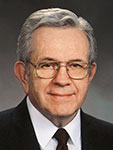
The Promise of the Atonement
“Restoring what you cannot restore, healing the wound you cannot heal, fixing that which you broke and cannot fix is the very purpose of the atonement of Christ. …
“I repeat, save for the exception of the very few who defect to perdition, there is no habit, no addiction, no rebellion, no transgression, no apostasy, no crime exempted from the promise of complete forgiveness. That is the promise of the atonement of Christ.”
President Boyd K. Packer, President of the Quorum of the Twelve Apostles, “The Brilliant Morning of Forgiveness,” Ensign, Nov. 1995, 19–20.
Tuesday, April 7, 2015
Prayer
I was listening to a talk by Truman Madsen this morning. I'm going to very loosely paraphrase what I remember because I think it's worth repeating.
He said something to the effect of there can be many things that you are not worthy to do -- prayer is not one of them. In fact, it is when we feel most unworthy and least like praying that we need to pray the most.
This is so true! Many times I've heard people say they don't feel like praying or don't feel worthy to pray-- When we are at our lowest is precisely when we need to pray the most! There is no worthy requirement to prayer. Anybody and everybody can pray anytime. In fact the scriptures say we should have a prayer in our hearts continually. But even if you haven't prayed for weeks, months, or years -- or ever -- it's never too late to start now.
That's my two cents.
He said something to the effect of there can be many things that you are not worthy to do -- prayer is not one of them. In fact, it is when we feel most unworthy and least like praying that we need to pray the most.
This is so true! Many times I've heard people say they don't feel like praying or don't feel worthy to pray-- When we are at our lowest is precisely when we need to pray the most! There is no worthy requirement to prayer. Anybody and everybody can pray anytime. In fact the scriptures say we should have a prayer in our hearts continually. But even if you haven't prayed for weeks, months, or years -- or ever -- it's never too late to start now.
That's my two cents.
Monday, April 6, 2015
April 2015 General Conference Quotes
There were so many good quotes during General conference that I wish I could have written them down. As I told Lisa that she informed me that I could find the quotes with pretty pictures online. So I happened upon these as I was going through my e-mail -- there was a link on the LDS living.
So I chose a few that I like from those available and pasted them onto my blog. My favorite quote from the entire conference was this first one I posted.

Another quote which I really liked but didn't see on the list was something to the effect of when physical wounds heal they always leave a scar but when spiritual wounds are healed through repentance-- There is no scar. I can't remember who said it. :-(

!["[Family] is the soure of human happiness." -Boyd K. Packer](https://lh3.googleusercontent.com/blogger_img_proxy/AEn0k_uOI6CjAh9tT7nUjOZWOfHesW6_sgm_oIL-fK8jzhcWJ8J2e4D3eBUt4CrpvXYPgmlezFn-vET4VQ4Lqcf30fwjmL56_7YwX_XpjMN5tCSGB7Hglr-ZN0amN77a8WkCxjrz=s0-d)


Elder Oaks had some other really great quotes but they don't have the transcripts posted yet. :-(
If I had to give a summary I would say a lot of talks focused on Family -- I would say that was the number one topic. Also, strengthening our testimonies and conversion -- trusting what we know to be true and not yielding to doubts. Emphasizing having to work daily on our own conversion to thwart the adversary's daily efforts to bring us down. And of course, since it was Easter several talks focused on Our Savior.
I always look at general conference to understand what is most troubling in the Church at this time and what we all need to focus on. Obviously, Satan's attacks on the family have increased or at least become more effective. And his efforts to distract us from that which is most important appear to be working -- just look at how many people value social media over anything else. And are, in fact, addicted. As just one example.
It appears to me that the warning voice is sounding loud and clear that we need to step up our defenses against the evil one both personally and in our families. To me this means getting our daily spiritual nourishment by way of Scripture study, prayer, uplifting music, LDS.org videos and talks, etc.
As Satan steps up his efforts, daily spiritual nourishment is becoming increasingly vital to our spiritual progression. If we are not progressing by working at it every day, we are regressing. There is no neutral ground.
That's my two cents.


So I chose a few that I like from those available and pasted them onto my blog. My favorite quote from the entire conference was this first one I posted.
Another quote which I really liked but didn't see on the list was something to the effect of when physical wounds heal they always leave a scar but when spiritual wounds are healed through repentance-- There is no scar. I can't remember who said it. :-(
Elder Oaks had some other really great quotes but they don't have the transcripts posted yet. :-(
If I had to give a summary I would say a lot of talks focused on Family -- I would say that was the number one topic. Also, strengthening our testimonies and conversion -- trusting what we know to be true and not yielding to doubts. Emphasizing having to work daily on our own conversion to thwart the adversary's daily efforts to bring us down. And of course, since it was Easter several talks focused on Our Savior.
I always look at general conference to understand what is most troubling in the Church at this time and what we all need to focus on. Obviously, Satan's attacks on the family have increased or at least become more effective. And his efforts to distract us from that which is most important appear to be working -- just look at how many people value social media over anything else. And are, in fact, addicted. As just one example.
It appears to me that the warning voice is sounding loud and clear that we need to step up our defenses against the evil one both personally and in our families. To me this means getting our daily spiritual nourishment by way of Scripture study, prayer, uplifting music, LDS.org videos and talks, etc.
As Satan steps up his efforts, daily spiritual nourishment is becoming increasingly vital to our spiritual progression. If we are not progressing by working at it every day, we are regressing. There is no neutral ground.
That's my two cents.
Wednesday, March 25, 2015
On the Wings of Eagles: Quotes and Commentary
I came across a wonderful article by President Dieter F. Uchtdorf -- who happens to be my favorite. :-) Anyway, I put the link at the bottom and I would encourage everybody to read the entire article. But here are a few quotes that stuck out to me.
"It isn’t until you come to a spiritual understanding of who you are that you can begin to take control of yourself. As you learn to control yourself, you will get control of your life. If you want to move the world, you first have to move yourself.
"President Spencer W. Kimball (1895–1985) often quoted an unknown author: “The greatest battle of life is fought out within the silent chambers of the soul. A victory on the inside of a man’s heart is worth a hundred conquests on the battlefields of life. To be master of yourself is the best guarantee that you will be master of the situation. Know thyself. The crown of character is self-control.”
"This leads us to God’s great gift to His children: agency.
"Lehi taught this most important doctrine to his children. He said: “The Lord God gave unto man that he should act for himself. … And they are free to choose liberty and eternal life, through the great Mediator of all men, or to choose captivity and death, according to the captivity and power of the devil; for he seeketh that all men might be miserable like unto himself” (2 Ne. 2:16, 27).
"You have agency, and you are free to choose. But there is actually no free agency. Agency has its price. You have to pay the consequences of your choices.
"Human agency was purchased with the price of Christ’s suffering. The power of Christ’s Atonement overcomes the effect of sin on the condition of wholehearted repentance. Through and by the Savior’s universal and infinite Atonement, all have been redeemed from the Fall and have become free forever to act for themselves (see 2 Ne. 2:26).
"Agency is a spiritual matter. Without awareness of alternatives, you could not choose. Agency is so important in your lives that you not only can choose obedience or rebellion, but you must.
Interestingly, this morning Lisa and I were discussing this very subject. I mentioned that if you're not continually working on living the Gospel, that you are rejecting it. There is no neutral ground. Those who think they are neutral, are actually rejecting the light from God, as President Uchtdorf puts it.
Living the Gospel requires daily continuous work. If we are not moving forward, we are moving backward.
"It isn’t until you come to a spiritual understanding of who you are that you can begin to take control of yourself. As you learn to control yourself, you will get control of your life. If you want to move the world, you first have to move yourself.
"President Spencer W. Kimball (1895–1985) often quoted an unknown author: “The greatest battle of life is fought out within the silent chambers of the soul. A victory on the inside of a man’s heart is worth a hundred conquests on the battlefields of life. To be master of yourself is the best guarantee that you will be master of the situation. Know thyself. The crown of character is self-control.”
"This leads us to God’s great gift to His children: agency.
"Lehi taught this most important doctrine to his children. He said: “The Lord God gave unto man that he should act for himself. … And they are free to choose liberty and eternal life, through the great Mediator of all men, or to choose captivity and death, according to the captivity and power of the devil; for he seeketh that all men might be miserable like unto himself” (2 Ne. 2:16, 27).
"You have agency, and you are free to choose. But there is actually no free agency. Agency has its price. You have to pay the consequences of your choices.
"Human agency was purchased with the price of Christ’s suffering. The power of Christ’s Atonement overcomes the effect of sin on the condition of wholehearted repentance. Through and by the Savior’s universal and infinite Atonement, all have been redeemed from the Fall and have become free forever to act for themselves (see 2 Ne. 2:26).
"Agency is a spiritual matter. Without awareness of alternatives, you could not choose. Agency is so important in your lives that you not only can choose obedience or rebellion, but you must.
During this life you cannot remain on neutral ground; you cannot abstain from either receiving or rejecting the light from God." (Emphasis added) -- President Dieter F. Uchtdorf, On the Wings of Eagles, 2003
Interestingly, this morning Lisa and I were discussing this very subject. I mentioned that if you're not continually working on living the Gospel, that you are rejecting it. There is no neutral ground. Those who think they are neutral, are actually rejecting the light from God, as President Uchtdorf puts it.
Living the Gospel requires daily continuous work. If we are not moving forward, we are moving backward.
I was listening to "The Infinite Atonement" this morning. One thing Elder Callister mentioned that struck me was, speaking of the gifts of the Spirit, that we must continually fervently pray and ask to receive those gifts we've been blessed with or for anything that we sincerely desire or wish for.
Just keeping the commandments and trying to live righteously is not enough. We have to ask the Lord for the desires of our hearts.
This makes total sense since work is an eternal principle and prayer is a form of work. I think it's something we often forget. The Lord requires effort on our part before he will bless us. He wants us to work to obtain those things which we desire. And he wants us to ask him for them. And if you think about it, things always mean more to us when we have worked hard to obtain them.
There are several scriptures which mention, "Ask and ye shall receive, knock and it shall be opened unto you".
Another quote from President Uchtdorf's talk, On the Wings of Eagles:
"Prayer, if given in faith, is acceptable to God at all times. If you ever feel you cannot pray, that is the time when you definitely need to pray. Nephi taught in plainness, “If ye would hearken unto the Spirit [of God] which teacheth a man to pray ye would know that ye must pray; for the evil spirit … teacheth him that he must not pray” (2 Ne. 32:8).
"President Harold B. Lee (1899–1973) taught, “The sincere prayer of the righteous heart opens to any individual the door to divine wisdom and strength in that for which he righteously seeks.”
"Obedience assures us an answer to our prayers. We read in the New Testament, “And whatsoever we ask, we receive of him, because we keep his commandments, and do those things that are pleasing in his sight” (1 Jn. 3:22).
"Daily, simple but sincere and mighty prayers will help you lift your lives to a higher spiritual altitude. In your prayers you praise God, give thanks to Him, confess weaknesses, petition needs, and express deep devotion to your Heavenly Father. As you do this in the name of Jesus Christ, the Redeemer, you perform a spiritual effort that leads to increased inspiration, revelation, and righteousness—not self-righteousness—and brings the brightness of heaven into your lives." -- President Dieter F. Uchtdorf, On the Wings of Eagles, 2003
This makes total sense since work is an eternal principle and prayer is a form of work. I think it's something we often forget. The Lord requires effort on our part before he will bless us. He wants us to work to obtain those things which we desire. And he wants us to ask him for them. And if you think about it, things always mean more to us when we have worked hard to obtain them.
There are several scriptures which mention, "Ask and ye shall receive, knock and it shall be opened unto you".
Another quote from President Uchtdorf's talk, On the Wings of Eagles:
"Prayer, if given in faith, is acceptable to God at all times. If you ever feel you cannot pray, that is the time when you definitely need to pray. Nephi taught in plainness, “If ye would hearken unto the Spirit [of God] which teacheth a man to pray ye would know that ye must pray; for the evil spirit … teacheth him that he must not pray” (2 Ne. 32:8).
"President Harold B. Lee (1899–1973) taught, “The sincere prayer of the righteous heart opens to any individual the door to divine wisdom and strength in that for which he righteously seeks.”
"Obedience assures us an answer to our prayers. We read in the New Testament, “And whatsoever we ask, we receive of him, because we keep his commandments, and do those things that are pleasing in his sight” (1 Jn. 3:22).
Well I actually combined two blogs into one. :-) But it seems to flow. Anyway, if you feel like you are not receiving answers to your prayers, perhaps you are not working hard enough. Or perhaps the Lord is delaying his answer for your own benefit, which He sometimes does. Or perhaps the answer is no. But one thing is certain, the Lord does hear and answer every sincere prayer offered to Him.
Remember that the Lord will not thwart the agency of mankind. Everybody must exercise his or her own moral agency and face the consequences whether good or bad. Therefore if your prayer pertains to someone else's lifestyle or choices, the Lord will not intervene, even when those poor choices detrimentally affect us directly.
Satan would have us believe that obedience limits our freedoms and agency when in fact, the opposite is true. As we learn and exercise self-control and practice obedience to the Lord, we are actually increasing the choices available to us and therefore expanding our freedoms.
Look at those who rebel against the Lord's laws, and are slaves to addiction. Or those who give in to temptation every time they face it. Are they more free than someone who actively chooses to obey the Lord? I think not.
Choosing to exercise our moral agency by actively striving to follow the Lord by living His commandments not only gives us more freedom but also brings more happiness and blessings in our lives.
That's my two cents.
Sunday, March 22, 2015
President Eyring Quote
"If the foundation of faith is not embedded in our hearts, the power to endure will crumble."
-- Henry B. Eyring, First Counselor in the First Presidency, April 2012 General Conference address "Mountains to Climb"
-- Henry B. Eyring, First Counselor in the First Presidency, April 2012 General Conference address "Mountains to Climb"
Sunday, March 15, 2015
Patience
From this month's visiting teaching message:
“Patience is not passive resignation, nor is it failing to act because of our fears. Patience means active waiting and enduring. It means staying with something … even when the desires of our hearts are delayed. Patience is not simply enduring; it is enduring well!”
“Patience means accepting that which cannot be changed and facing it with courage, grace, and faith. It means being ‘willing to submit to all things which the Lord seeth fit to inflict upon [us], even as a child doth submit to his father’ [Mosiah 3:19]. Ultimately, patience means being ‘firm and steadfast, and immovable in keeping the commandments of the Lord’ [1 Nephi 2:10] every hour of every day, even when it is hard to do so.”
-- President Dieter F. Uchtdorf, Second Counselor in the First Presidency
“Patience is not passive resignation, nor is it failing to act because of our fears. Patience means active waiting and enduring. It means staying with something … even when the desires of our hearts are delayed. Patience is not simply enduring; it is enduring well!”
“Patience means accepting that which cannot be changed and facing it with courage, grace, and faith. It means being ‘willing to submit to all things which the Lord seeth fit to inflict upon [us], even as a child doth submit to his father’ [Mosiah 3:19]. Ultimately, patience means being ‘firm and steadfast, and immovable in keeping the commandments of the Lord’ [1 Nephi 2:10] every hour of every day, even when it is hard to do so.”
-- President Dieter F. Uchtdorf, Second Counselor in the First Presidency
Saturday, March 14, 2015
X-rays 16 weeks
Another Friday the 13th and another set of x-rays.
These were taken yesterday. Today marks the 16th week since the break. And 13.5 weeks since diagnosis.


This lateral view actually provides a glimmer of hope.
The posterior aspect of the femur shows some bone growth. Which is hopefully indicative of increasing stability along the sagittal plane.
Next step: check serum vitamin D levels, CT scan to get a better view of possible healing.
Surgical reduction/fixation is not ruled out yet but I'm hoping it doesn't come to that. And the trauma surgeon was not optimistic that the benefits would outweigh the risks. So that will go on the back burner for now.
He did mention amputation as a last resort possibility. But obviously that would be end of the line option.
For now I remain hopeful that it is healing slowly but surely. Thank you for all of your prayers and fasting in my behalf. I truly appreciate it.
Sunday, March 8, 2015
Mary Ann Powell
Which of these photos of Mary Ann Powell should I use for my family tree wall?
Put your answer in the comments section.


Mary Ann Powell is my great great great grandmother. She married David Dorwart Sabin and they are the parents of Henry Sabin who married Nancy Jane Stone and they are the parents of Henry Elmer Sabin who married Lillie Devena Christensen and they are the parents of Marvin Elmer Sabin who is my maternal grandfather.
I have a 12 page autobiography by Mary Ann Powell which is very interesting. I will just tell you a few highlights that I remember.
She was born in South Wales where her father John Powell was an expert stonemason. Her father converted and was baptized into the Church of Jesus Christ of latter-day Saints. Her mother later converted.
I believe it was 1856 when they sailed across the "pond", as they say, and came to America. She was 12 or 13 at the time. Her mother was quite ill and Mary had to do a lot of the work.
Upon reaching America her family joined a handcart company and crossed the plains into the Salt Lake Valley. Mary walked the entire way. Even helping to pull others' handcarts.
Her father John, being an expert stonemason, worked on the Salt Lake Temple. Two weeks after reaching Salt Lake he died. Her mother settled in Payson, Utah. Her brother William, also a stonemason, continued work on the Salt Lake Temple.
Here is a small snippet from her autobiography:
". On January 30,
1865, I married David Dorwart Sabin. He was born in Pennsylvania, and at the
age of ten had come to Utah with his family. His parents settled in Salt Lake
City and resided in the seventeenth ward until the spring of 1858 when there
was a general move southward. I had known Brother Sabin several years before I
began keeping company with him. He was an honorable upright man.
"We resided in
Payson fourteen years. The first home we owned was a block north of the Payson
flour mill. Brother Sabin built it. It was a blue adobe, two rooms, a little
loft, and a nice cellar. There was a nice little orchard from which I used to
gather and dry fruit. Those days there was a good price for dried fruit.
"During
our early married life, we were buying a molasses mill in Salem. My husband
made the purchase for six hundred dollars. He repaired the machinery and set it
to running at once. He made thousands of gallons of molasses. Our molasses was
known throughout the state. The mill usually worked from September until
November. For several years it ran day and night during the molasses making season.
After the settlers quit raising cane, Brother Sabin changed the mill into a saw
mill which he operated for several years. The wood for it was supplied from
Loafer and Maple Canyons.
"During the Black Hawk war, Brother Sabin held the
position of home guard. Sometimes he would stand on duty for three or four
nights in succession, but usually the turn came only one night a week. This
lasted for two years. In 1879 we moved to Salem and hewed the lumber for our
house from the Santaquin Canyon. He worked up the lumber in his own mill. Also
made his own shingles and lathes.
"We built a very nice home of seven rooms. In
this home my three youngest children were born. Our family now numbered nine
children. "1- Sarah Elizabeth 2- David 3- Henry 4- Mary Ann 5- John 6-
Aretta 7- Margaret Amanda 8- Emma Eleanor 9- Ruth.
"During the
greater part of our married life, Brother Sabin held the office of Bishop´s
counselor.He acted in this position during three different Bishops. He
was superintendent of the Sunday school for a number of years also.
"We were
privileged to entertain many of the leaders of the church in our home. Among
those who visited in our home was Joseph F. Smith, George I. Cannon, Dr. Hardy,
Abraham Owen Smart, James E. Talmage, David John, and Brother Partridge.
"Two
years after Brother Sabin´s death, I sold our store and built a new home in the
Central part of Salem where I am still residing. I am now in my eighty second
year. The only living child of my father´s family. I am enjoying fairly good
health for my season of life. My home is cozy and pleasant with all the
convenience modern equipment can make. I am not burdened in any way. I take an
active interest in the house keeping and work a little each day according to my
strength.
At this time in my life I recall the incidents of the past only for the pleasant
memories they bring. I believe the todays are just as good as the yesterdays.
My heart´s best message to my sons and daughters, grand children, and great
grand children is Look Ahead. Don´t look behind." -- Mary Ann Powell, autobiography
Saturday, March 7, 2015
Paternal Grandfather Ancestor Photographs

William Merritt Shaw is my great great great grandfather. He married Cornelia Margaret Sluyter. They are the parents of Tryphosa Shaw who married Nelson Simmons. They begat Millie Vieta Simmons who married Bert Nickolas Stone who are the parents of Newell Elbert Stone who is my paternal grandfather.
Something interesting about William Merritt Shaw is that, according to my great grandmother Millie, he was a graduate of Harvard University.

Apparently the Shaws were staunch Seventh-day Adventists and went west with the SDA movement.
According to my third cousin, She has letters written between my great great grandmother Tryphosa and Ellen White's people. Ellen White being the founder or one of the bigwigs anyway of the Seventh-day Adventists.

William Merritt Shaw family
Tryphosa back left

Same family as above years later.
It gives me a much different vibe of that family. They don't look like the same refined, proper people as above. :-)

Something interesting about my great great grandfather Nelson Simmons -- according to his daughter Millie, He had a mean devil of a stepmother who kicked him out at age 8 and he was on his own since then.
Also according to Millie -- Nelson was very well versed in the Bible and read it often. He could also read the Hebrew Bible.
Another story Millie tells is that he accidentally stuck a knife in his brother's eye while skating a squirrel in Nebraska.

Here is a direct quote from the transcript of Millie from 1968
"Indians shooting at the wagon? Yes, there was a woman, they had to flee in the night to get away from the Indians, and there was a woman that had a frying pan up whenever she came to some brush she would hold the pan up like this. That was an Indian uprising. I don’t know what year it was. My other was among them. I don’t know how old she was."
"The Indians bothered in Nebraska awful bad. They stole our horses while the folks were in Nebraska. The folks were there awhile. I don’t know why they had to leave. Nebraska was where the Indians bothered my folks so bad. We had a big Newfoundland dog. She had pups every hear and the Indians came and stole them. They cooked and ate them (the pups)."
"The government paid the people for years afterward for the horses that the Indians stole. They paid the people for the horses."

Nelson and Tryphosa Shaw Simmons family
My great-grandmother Millie is in the back middle. Her sister Marguerite on her left and in front next to Tryphosa is Irene.
According to my grandfather, The little boy in front between Nelson and Tryphosa was actually Millie's son and not brother. I hate to spread rumors and at this point that's merely speculation. Although I did do the math and it is possible -- Millie would have been 17 when Carl was born.
If it's true, it was kept hush-hush and never revealed. Carl was raised as Millie's brother.

One of the fun things about doing family history work is finding stories and learning more about my ancestors and their lives.
And digging up potential skeletons in the closet also makes it interesting.
Millie seems to have more than her share of skeletons, according to my grandfather -- her son.
Interestingly, for being staunch Seventh-day Adventists -- none of their current descendents that we know about still practice the religion. Most of them fell away during my grandpa's generation. My third cousin went to SDA church with her grandmother but left when she was 12.
As far as I know, neither my grandpa nor any of his siblings raised their children as Seventh-day Adventists. Apparently the Simmons children were too heavy-handed in raising their children as Seventh-day Adventists. At least that's the story I hear.
Or maybe they all just recognized that they didn't have the full truth. :-)
Not likely. :-)
Friday, March 6, 2015
Paternal Grandmother Ancestry Photos

My great great great grandmother. Anna Elisa Burrell married Samuel Walker (below) and they are the parents of William Franklin Walker who was the father of Myron Day Walker who is the father of Lois Fern Walker who is the mother of my daddy :-).


My great great grandfather -- explained above.

Hannah Ada Davis is my great great great grandmother. She married Richard Elsy Feris Moore. They are the parents of Mary Ada Moore who married William Franklin Walker (above). They begat Myron Day Walker who begat Lois Fern Walker, my paternal grandmother. :-)


Mary Ada Moore bears a striking resemblance to my cousin Preston. :-)

William Franklin Walker and Mary Ada Moore wedding photo
November 4, 1891
Monday, March 2, 2015
Elder Ballard Quote
"We cannot foresee what the Lord has in mind for us. Our only course of action is to be prepared and worthy for whatever he requires. We must govern our actions every day with our future in mind."
—M. Russell Ballard, "Purity Precedes Power"
Subscribe to:
Posts (Atom)